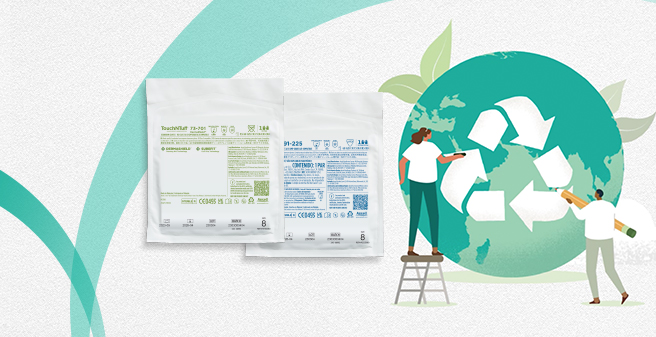
Sustainable Cleanroom Garment Packaging with Kits
Discover how BioClean-D™ Garment Kits reduce plastic waste, improve cleanroom gowning efficiency, and support sustainable operations.

CHOOSE YOUR COUNTRY / REGION


In a world where sustainability has transitioned from an option to an expectation, the reduction of plastic packaging has become a key focus across industries. Ansell recognizes this, by introducing innovative plastic packaging which maintains product integrity and reduces environmental impact helping customers, within cleanroom industries, achieve their sustainability goals as well as reducing our own carbon footprint.
Cleanrooms require stringent cleanliness and safety standards. Industries such as pharmaceutical manufacturing, biotechnology, and semiconductor production cannot afford contaminants in their processes as they can cause significant disruptions, product recalls, and considerable financial losses. Within these industries, ensuring product sterility and integrity has relied heavily on plastic packaging.
Ansell’s article, Why Plastic Packaging is Crucial for Cleanroom Consumables, highlights plastic’s critical role in contamination prevention, explaining how plastic remains essential due to its durability, reliability, and hygienic qualities.
At the heart of Ansell’s sustainability efforts lies Ansell Earth, our strategic initiative aimed at minimizing environmental impacts throughout the entire product lifecycle. Ansell Earth is structured around five key sustainability pillars:
 Material Selection Selecting materials that minimize a product’s environmental impact without affecting its quality or performance. |
 Optimized Manufacturing Optimizing the energy consumption, waste generation and water consumption of our manufacturing processes. |
 Packaging Using scientific research to minimize our environmental impact while maintaining our superior quality that protects people and products. |
 Use Increasing product durability and lifespan because longer product lives reduce the need for replacement, which generates less waste. |
 End Of Use What happens to a product after it’s served its purpose? Optimizing end of use is essential to reducing the consumption of materials and energy. |
Through the Ansell Earth initiative, we are continually innovating our cleanroom packaging solutions, significantly improving their environmental profiles without sacrificing the strict safety and cleanliness requirements essential in cleanroom applications.
Ansell’s SMART Pack initiative revolutionizes cleanroom packaging by significantly reducing its environmental impact:
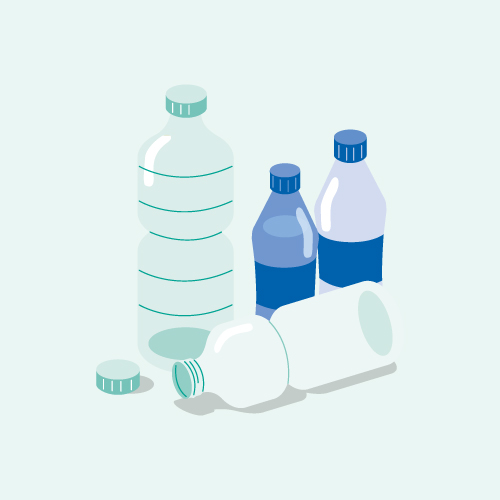 Smaller pouches By making pouches 56% smaller, we’re saving over 20.4 tons of plastic annually1, the equivalent of 2 million plastic water bottles2. This substantial reduction in plastic usage directly contributes to lower landfill waste and environmental pollution. |
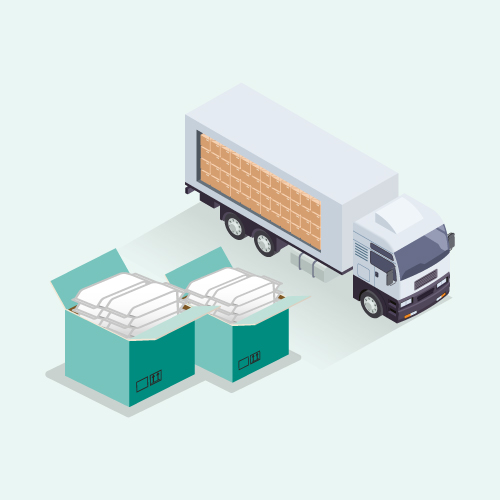 Smaller, Lighter Shipper Cases Transitioning to smaller and lighter shipper cases made from 100% recycled cardboard significantly reduces packaging waste. This packaging change translates to 27 tons fewer CO2 emissions annually3, equating to 73,340 fewer miles driven by delivery vans - that's almost 3 times around the globe!4 |
 Incorporating Recycled Materials HDPE liners used in shipper cases are produced with 30% recycled content, further supporting the circular economy and reducing dependence on virgin materials. |
The packaging for BioClean™ Nitrile RABS & Isolator Gloves demonstrates Ansell’s commitment to sustainability through practical improvements:
 Removal of Correx PP Shipper Case By eliminating polypropylene (PP) shipper cases, we save 674 kg of PP annually. Reducing unnecessary packaging materials helps lower plastic waste and facilitates easier recycling practices. |
 Increased Recycled Content We utilize shipper case liners made from 30% recycled HDPE, enhancing sustainability through the reuse of materials. |
 100% Recyclable Packaging All packaging materials used are fully recyclable5, composed of low-density polyethylene (LDPE) and high-density polyethylene (HDPE), ensuring compatibility with local recycling facilities. |
Discover more about BioClean™ Nitrile RABS & Isolator Gloves.
Ansell’s BioClean-D™ Garment Kits illustrate further sustainable innovations in cleanroom packaging, by consolidating disposable garment components into a single packed kit:
 Reduction in Plastic Waste The single-bag approach cuts plastic waste by two-thirds, saving 1 ton of plastic annually6. This is equivalent to eliminating approximately 2.38 million plastic straws from the waste stream7. |
 Improved Shipping Efficiency With consolidated packaging, shipping efficiency improves by 116% per shipper container, resulting in a 53% reduction in the total number of shipments required annually6. |
 Fully Recyclable Materials Both the inner (LDPE) and outer (HDPE) bags, along with shipper cases (made from 100% recycled content), are recyclable5, further reducing environmental impact. |
Learn more about BioClean-D™ Garment Kits.
Curious to learn more about Ansell’s sustainable initiatives and how Ansell Earth drives our packaging innovations? Watch our exclusive webinar to discover practical insights on reducing waste, cutting emissions, and enhancing operational efficiency.

Ansell's sustainability strategy is not merely about meeting regulatory requirements but about proactive leadership in environmental stewardship. Our commitment is reflected across our global operations, including our independently certified "Zero Waste to Landfill" manufacturing facilities.
As sustainability continues to evolve into a competitive differentiator, Ansell remains committed to proactive environmental stewardship. Through initiatives like SMART Pack, BioClean™ Nitrile RABS & Isolator Gloves, and BioClean-D™ Garment Kits, we consistently lead the way in sustainable innovation. Our comprehensive approach to sustainability ensures we protect people, products, and the planet, demonstrating that environmental responsibility is not just about compliance, but an essential component of future-ready industry leadership.
References:
1. Based on FY22 sales volumes (styles 91-225 & 73-701 only)
2. Average 500ml plastic water bottle is 12.5grams
3. Based on 73-701 current shipper case weight vs. 73-701 new shipper case weight
4. UK Government GHG Conversion Factors for Company Reporting, v1, 2021, average emission conversion factors for delivery van up to 3.5 ton (diesel)
5. Always check your local recyclable status of HDPE & LDPE as this plastic material may not be considered suitable for recycling in your country.
6. Based on FY24 sales volumes (style S-BDKM only)
7. https://phys.org/news/2018-04-science-amount-straws-plastic-pollution.html


Discover how BioClean-D™ Garment Kits reduce plastic waste, improve cleanroom gowning efficiency, and support sustainable operations.
Discover how BioClean™ anti-fog goggles support cleanroom operators in meeting compliance and reducing contamination risks.
.ashx?rev=f98b59b1bd12450ab06db7ef6eb5cfe4)
Discover Ansell's SMART Pack: Innovative, sustainable packaging for sterile cleanroom PPE gloves. Explore the future of cleanroom packaging today.