The right choice of cleanroom apparel can make or break contamination control. Even the smallest compromise in garment integrity can introduce particles and microorganisms, compromising cleanroom integrity and regulatory compliance. This is especially critical in Grade A and B cleanrooms — environments where the highest levels of sterility and cleanliness are required.
In this article, we will explore disposable and reusable coveralls in depth and compare their effectiveness in maintaining contamination control. By the end, you’ll have a clearer understanding of which type of apparel best supports your cleanroom’s safety, performance, and sustainability goals.
Defining Disposable and Reusable Cleanroom Coveralls?
- Disposable cleanroom coveralls are single-use protective garments that are designed for high-contamination control environments and eliminate cross-contamination risks.
- Reusable cleanroom coveralls are multi-use garments that require regular laundering, sterilization, and proper storage to maintain cleanliness. While they can be used multiple times, repeated washing and sterilization may, degrade the fabric over time, impacting its protective performance.
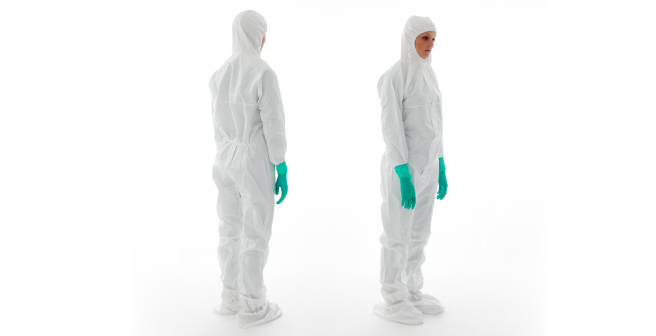
Disposable Coverall
Side by Side Comparison: Disposable vs Reusable Cleanroom Coveralls
For a quick overview, the table below highlights the key differences between disposable and reusable coveralls. To explore these differences in greater detail, read the full technical release.
| Factors |
Disposable Coveralls |
Reusable Coveralls |
| 🧵 Material & Post-Processing |
Made of polyethylene film outer layer and non-woven polypropylene inner layer. Or Spunbond/Meltblown/Spunbond (SMS) material.
Sterilized once by gamma irradiation without water usage, maintaining garment integrity.
|
Made of woven polyester, sterilized multiple times by gamma irradiation or autoclaving, and washed in deionized water.
Repeated irradiation cycles cause fiber breakdown, fabric relaxation, and increased pore size, reducing effectiveness.
|
| 🦠 Bacterial Filtration Efficiency (BFE) |
Not applicable on garments with a laminated material structure.
SMS material provides 95% BFE.
|
Initially <70% BFE, but drops to <40% after multiple washes, increasing contamination risks.
|
| 🧪 Chemical & Particle Protection |
Provides TYPE 6 limited protection against liquid spray and splash, and TYPE 5 protection against solid particulates.
Designed to prevent skin particles, hair, lint, and other contaminants from escaping.
|
Not effective against chemical protection—substances can easily penetrate the fabric, leading to contamination risks.
|
| 🔧 Repairs & Rental Agreements |
No repairs or rental agreements needed—one-time purchase with no hidden costs.
|
Requires frequent repairs for even minor damage and involves long-term rental contracts with fixed weekly costs, regardless of usage.
|
| 💰 Cost Considerations |
Lower upfront cost, but ongoing purchase is required.
|
Higher initial investment due to rental/laundry contracts but may be cost-effective over time.
|
| ♻️ Environmental Considerations |
Generates waste after each use, but modern disposable coveralls are designed to reduce material usage while ensuring contamination control.
|
Requires high water and energy consumption for repeated washing and sterilization.
While it reduces waste generation, the long-term impact of laundering chemicals and resource usage should be considered.
|
The Importance of Reliable Contamination Control
Human presence contributes to 80-90% of all particle contamination in cleanrooms. Rigorous testing highlights significant concerns with reusable garments:
- 100% of sterile reusable garments tested showed reduced Bacterial Filtration Efficiency (BFE) after multiple laundering cycles.
- The initial filtration efficiency of reusable garments was typically less than 70%.
- Fabric degradation at the sub-micron level allowed bacterial penetration, significantly increasing contamination risk. The product degraded more rapidly than expected, and the decline continued through multiple wash cycles.
- The total cost of ownership for reusable cleanroom apparel was much higher than projected.
- The average number of wash cycles achieved was significantly lower than expected.
- Disposable garments consistently demonstrated superior performance, with a stable 98% BFE.
Benefits of Disposable Cleanroom Coverall
Disposable garments offer clear contamination control advantages:
- Predictable Protection: Consistent performance with each new garment.
- Transparency: Well-documented and easily accessible performance data ensures compliance.
- Simplified Donning: Designed to minimize contamination risks during aseptic donning.
- Comfort & Compliance: Breathable fabric options support long-term wearability.
- Sustainable Options: Advanced recycling program – RightCycle™ for non-hazardous waste available to manage environmental impact effectively.
- Sterility Assurance: Individually vacuum-sealed packaging maintains garment sterility until use.